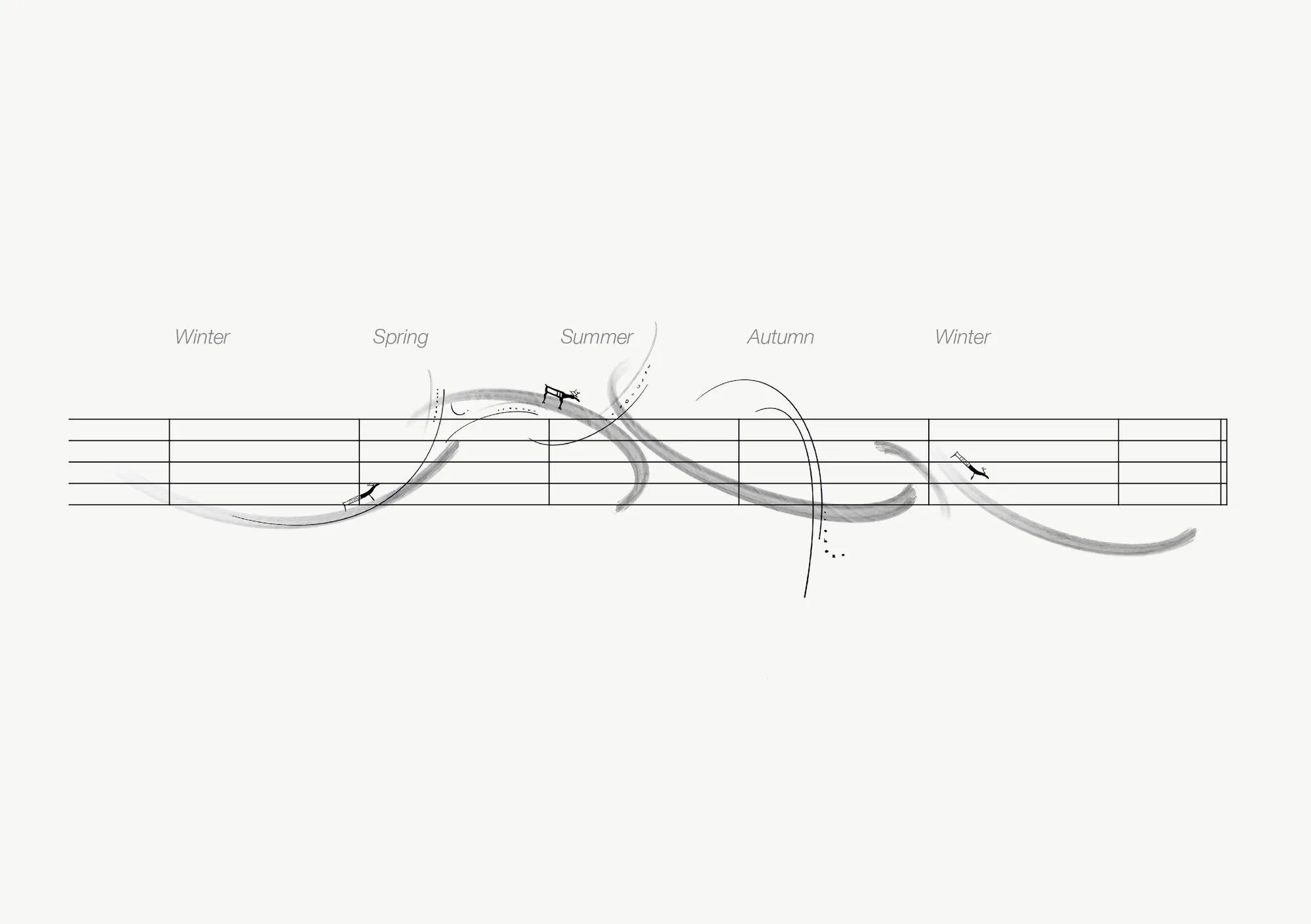
Assembling the Arctic Symphony is the design booklet for my graduation project at TU Delft, in the Explore Lab studio. It documents the architecture itself: the models, the drawings and the materials that came out of a year working on the Eibyelva river in Alta.
The proposal is a living structure in three parts. The dwelling units give shelter, each built around a rammed earth core that holds the fireplace, the cooking and the sleeping spaces, with a shower fed by water harvested from the roof and warmed by the same fire. The workshop sits at the corners of the bridge and works as the metabolic centre of the whole thing: it takes wood and earth from the site and turns them into beams, planks and compressed earth blocks, and it draws its energy from the river. The bridge connects the two and carries people, materials and ideas between them.
The wooden elements are joined with old farm joinery and wooden pins, traditional techniques that tie the structure to how building was done here before. The buildings are meant to age. As a dwelling unit reaches the end of its life the facade opens up, water works into the rammed earth core, and the core erodes back into the river it came from.
Two models carry the argument. A 1:10 000 landscape model shows the terrain, the meandering river and the lower mountains, deliberately with no architecture in it. A 1:200 model then places the structure in that landscape and shows it at several ages at once: weathered units from the past next to new units still in production. Its river bed was made by running sand and water until the terrain sculpted itself.
The booklet ends with jars and vials of material carried back from the site: earth and moss still alive a year after it was collected, river water with sand and stones, silt from the water's edge, the forest floor.